
The History of the American Paint Horse
Discover the captivating history of the American Paint Horse, from its roots with Native American tribes to its prominence in various disciplines today. Explore the origins of their unique coat patterns and learn how these versatile horses have become a beloved part of American equestrian culture.
Jordan Terry
4/16/20242 min read
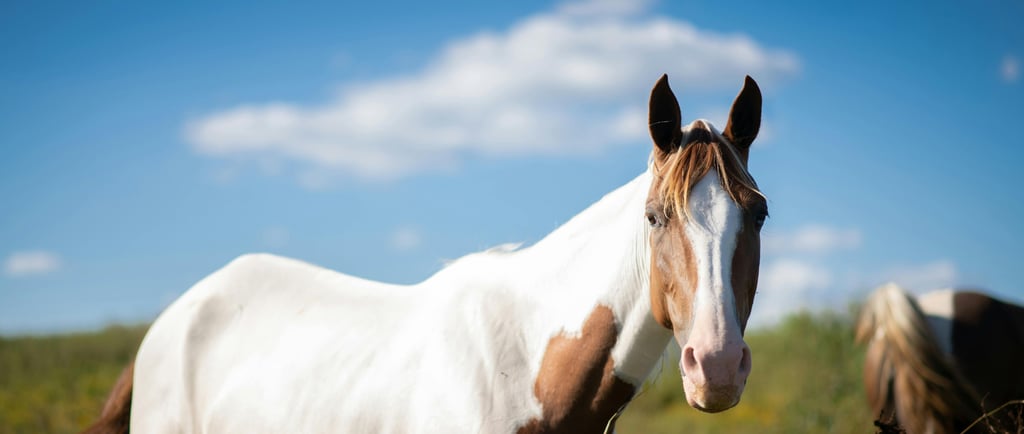
These horses have a rich heritage that spans centuries and showcases their unique beauty and versatility. Let's dive right in!
The story of American Paint Horses begins with the arrival of Spanish conquistadors in North America during the 16th century. These explorers brought with them a variety of horses, including Andalusians and Barbs, which possessed the distinctive coat patterns that would later become characteristic of the Paint Horse breed.
Native American tribes quickly recognized the value of these horses and began incorporating them into their cultures and daily lives. The horses' strength, endurance, and adaptability made them indispensable for hunting, transportation, and warfare. The tribes selectively bred the horses, favoring those with flashy coat patterns and desirable traits.
As European settlers began to migrate westward in the 17th and 18th centuries, they encountered the Native American tribes and witnessed the remarkable abilities of their horses. The settlers were captivated by the unique coat patterns and the versatility of the horses, leading to an increased demand for them.
Over time, as the horse population in North America grew, a distinct type of horse emerged, known as the "painted horse" or "pinto." These horses possessed the characteristic coat patterns of the Paint Horse breed we know today. However, it's important to note that the term "pinto" was used to describe any horse with large patches of white and another color, regardless of breed.
In the early 20th century, a group of horse enthusiasts recognized the need to preserve and promote these horses with their unique coat patterns. They established the American Paint Horse Association (APHA) in 1962, with the goal of creating a registry for these horses and promoting their versatility in various disciplines.
The APHA set specific criteria for registration, requiring horses to have a distinct coat pattern and meet certain conformation standards. The registry also allowed for the inclusion of Quarter Horse and Thoroughbred bloodlines, as long as the horse met the coat pattern requirements.
With the establishment of the APHA, the breed gained recognition and popularity. Paint Horses began to excel in various disciplines, including Western pleasure, reining, cutting, and even racing. Their versatility and striking appearance made them stand out in the show ring and on the ranch.
One of the most famous Paint Horses in history is a stallion named "Tobiano." Born in 1962, Tobiano was renowned for his exceptional conformation and athleticism.
Oh, Tobiano was quite a remarkable stallion! He was born in 1962 and gained immense fame for his exceptional conformation and athletic abilities. Tobiano was a true ambassador for the American Paint Horse breed, showcasing their versatility and striking appearance. His legacy lives on, inspiring generations of equestrians to appreciate the beauty and capabilities of Paint Horses.